Free Consultation info@webcreationdesign.com

Why Marketing Agencies Sometimes Fail Addiction Treatment Centers

Many addiction treatment centers partner with marketing agencies hoping to increase visibility and admissions.

Sometimes those partnerships work extremely well.

But other times, the relationship creates more confusion than clarity.

One of the most common issues is data ownership.

In some cases, agencies set up marketing systems under their own accounts rather than the treatment center’s.

That can include:

  • Google Analytics accounts
  • Advertising platforms
  • Call tracking software
  • Landing pages used for campaigns

While this may seem convenient at first, it can create serious challenges later.

If the relationship ends, the treatment center may lose access to important data.

That means losing insights into:

  • Website performance
  • Advertising results
  • Lead tracking information

Suddenly, the organization must rebuild its marketing infrastructure from scratch.

At Web Creation Design (WCD), we believe the treatment center should always own its marketing systems.

The agency should provide expertise, strategy, and support — but the data should remain with the organization.

This philosophy protects the long-term growth of the treatment center.

It also creates transparency.

Leadership should always be able to see:

  • Where leads originate
  • Which campaigns perform best
  • How marketing investments translate into admissions

Marketing partnerships work best when both sides are aligned around a shared goal: sustainable growth and transparency.

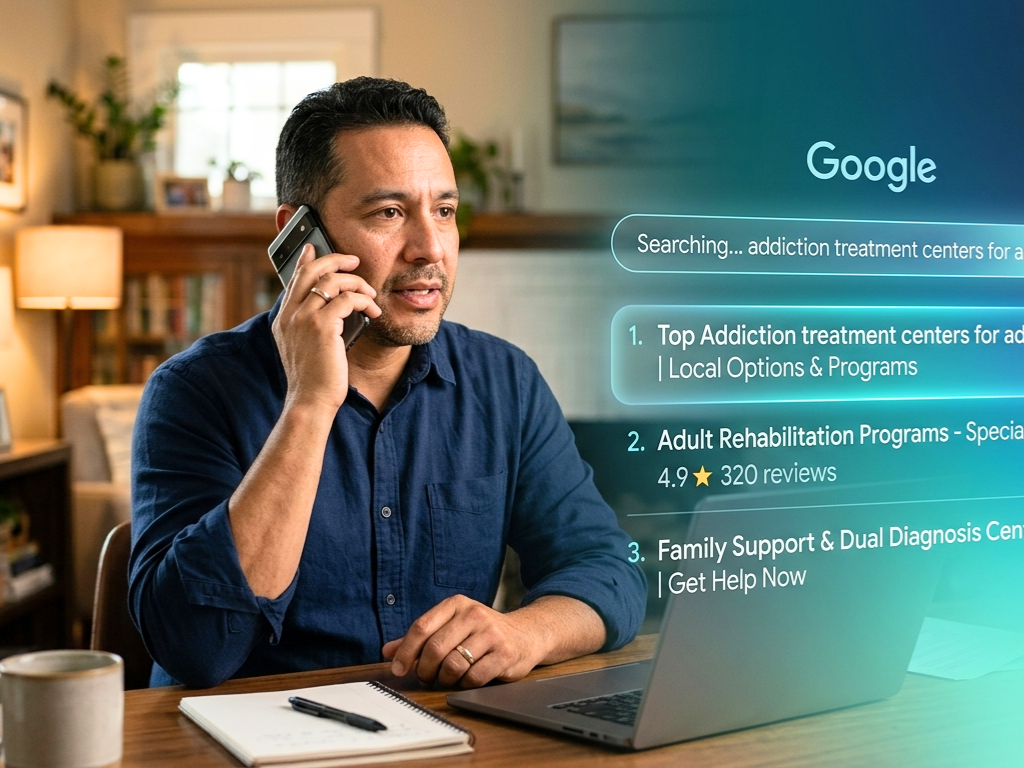
SEO for Addiction Treatment Centers: Why It’s More Than Ranking on Google

Search engine optimization (SEO) is often misunderstood in healthcare marketing.

Many organizations think SEO simply means ranking higher on Google.

But ranking alone doesn’t guarantee meaningful results.

A treatment center could rank well for dozens of keywords and still receive very few admissions.

Why?

Because effective SEO is not just about search engines — it’s about trust, credibility, and relevance.

Families searching for treatment want to know they can trust the program they are considering.

Organizations like the American Society of Addiction Medicine emphasize the importance of evidence-based treatment and clinical transparency. These same principles apply online.

A strong SEO strategy for treatment centers typically includes:

  • Educational blog content
  • Clear descriptions of treatment approaches
  • Transparent information about levels of care
  • Trust-building resources and references

When potential clients land on a website, they want answers to real questions, such as:

  • What level of care does my loved one need?
  • Does this program accept our insurance?
  • What makes this treatment center different?

SEO works best when it helps answer those questions.

At Web Creation Design (WCD), we approach SEO as part of a broader growth system.

Ranking in search results is only one piece of the puzzle.

The real goal is to create an online presence that connects with both families seeking help and professionals referring clients.

This often involves:

  • Creating educational resources
  • Improving website structure and user experience
  • Building partnerships that generate credible backlinks

Over time, these efforts build authority — both with search engines and with the community.

And when authority grows, so does visibility.

But more importantly, so does trust.

The Real Journey of a Treatment Center Lead (From Google Search to Admission)

When someone finally reaches out for addiction treatment, the journey leading up to that moment is rarely simple.

Families often spend days or weeks researching options, speaking with professionals, and trying to understand what level of care their loved one needs.

Yet many treatment centers only see the final step in that journey: the phone call.

In reality, a typical patient journey may look like this:

  1. A parent searches Google late at night
  2. They read several websites about treatment options
  3. A therapist or counselor provides a recommendation
  4. They visit the program’s website again
  5. They finally make the phone call

Each of these steps influences the decision.

According to consumer behavior research from Google, people often interact with multiple touchpoints before making healthcare decisions.

This is especially true in addiction treatment, where families are under emotional stress and want to ensure they make the right choice.

However, many treatment centers struggle to track these touchpoints.

Without the right systems in place, a program might only record:

“Call from website.”

That description leaves out valuable insight

At Web Creation Design (WCD), we help treatment organizations understand the complete journey of a lead by connecting several systems together.

These include:

  • Website analytics platforms
  • Call tracking software
  • CRM systems for admissions
  • Referral tracking databases

When these systems are aligned, leadership can see patterns such as:

  • Which marketing channels drive the most qualified leads
  • Which referral partners generate consistent admissions
  • Which geographic markets produce the highest demand

Understanding this journey helps treatment centers make smarter decisions about their marketing investments.

Instead of relying on guesswork, they gain visibility into the entire path from search to admission.

And when you understand the journey, you can improve it—making it easier for families to find the help they need.

Why Most Addiction Treatment Centers Don’t Really Understand Their Marketing

Many addiction treatment centers invest heavily in marketing—SEO, Google Ads, social media campaigns—yet when leadership asks a simple question, the answers are often unclear.

Where did the admission actually come from?

For many organizations, the answer stops at the phone call.

Admissions teams may report:

“Someone called from the website.”

But that answer doesn’t tell the full story.

Did they find the website through Google search?
Did a therapist recommend the program?
Did they see a social media post?
Or did a previous referral source guide them there?

Understanding the entire patient journey is essential for sustainable growth in behavioral healthcare.

Organizations like the Substance Abuse and Mental Health Services Administration report that millions of Americans need treatment every year, yet access remains limited. That means treatment centers must not only provide excellent care — they must also understand how people find them.

Unfortunately, many programs operate with fragmented marketing visibility.

✓ Admissions may track calls.
✓ Marketing may track website traffic.
✓ Business development may track referral relationships.

But these systems often operate in isolation.

The result? Leadership lacks a clear picture of what is truly driving admissions.

At Web Creation Design (WCD), we often explain that marketing is not just about generating traffic—it’s about building a growth infrastructure.

That infrastructure connects:

  • Website analytics
  • Call tracking systems
  • CRM platforms
  • Referral databases
  • Admissions workflows
  • Business development outreach

When these systems communicate with each other, treatment centers gain clarity.

Instead of guessing where patients come from, they can identify patterns such as:

  • Which referral partners send the highest-quality clients
  • Which marketing channels generate real admissions
  • Which campaigns drive insurance-qualified leads

Research from the National Institute on Drug Abuse shows that access to effective treatment often depends on awareness and referral networks. In other words, visibility and connection matter.

The treatment centers that grow sustainably are those that understand this ecosystem.

Marketing is not just about clicks and impressions.

It’s about aligning marketing, admissions, and referral partnerships into one connected system.

That’s where real growth happens.